
AC Repair for Homes & Businesses
When your air conditioner stops cooling properly, the problem may be more than a simple thermostat setting. Warm air, weak airflow, short cycling, unusual noises, frozen coils, water around the indoor unit, or an AC that runs constantly can point to problems with the refrigerant circuit, electrical components, airflow, coils, blower motor, condensate system, or other parts of the equipment.
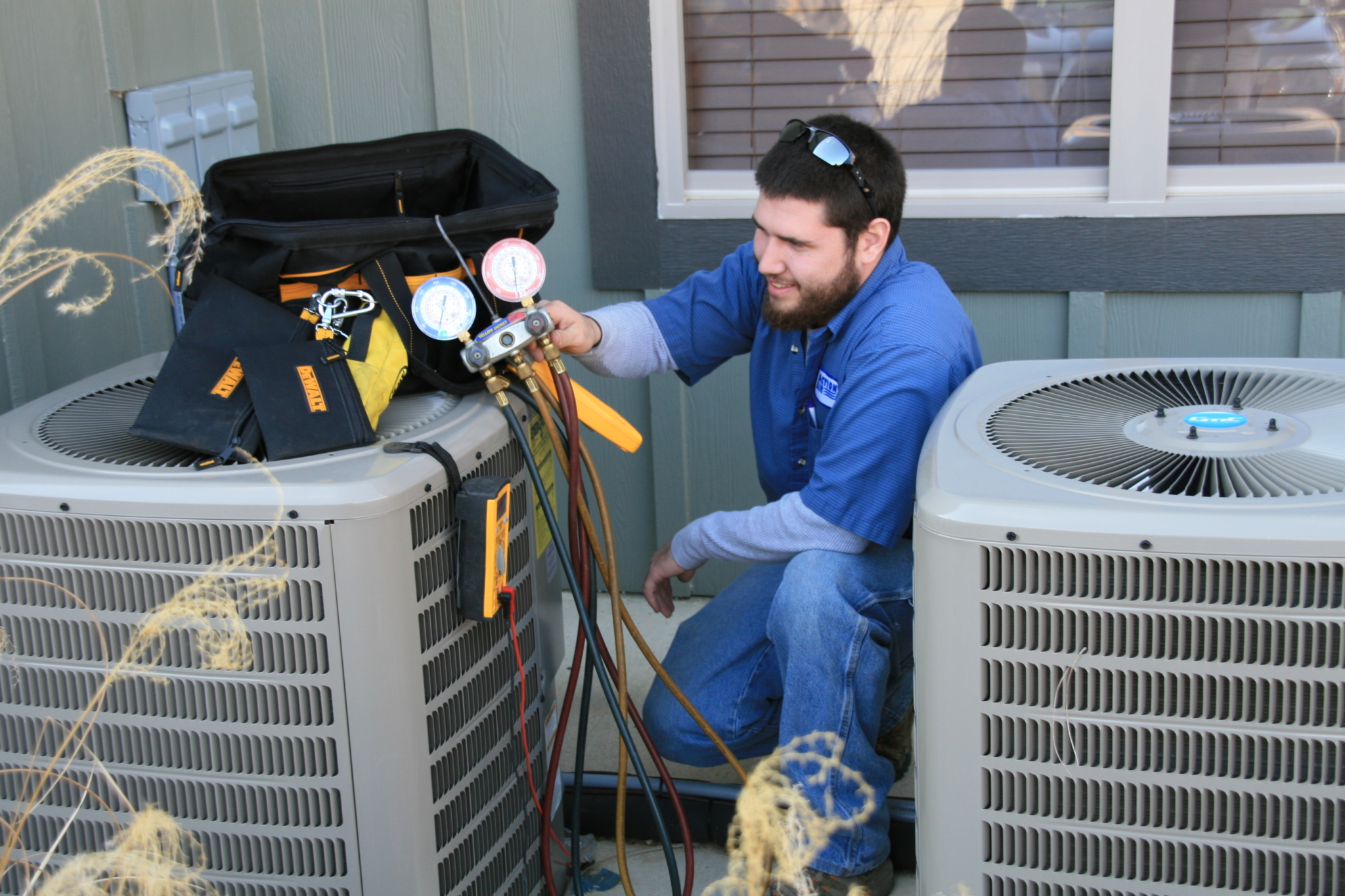
With 10+ years of HVAC experience, Go Houston Heating & Cooling provides professional AC repair for residential and commercial systems. We focus on identifying the actual cause of the problem and getting your cooling system back to proper operation.
AC Repair for Problems That Affect Your Comfort
An air conditioner does not have to stop completely before it needs repair. A system that runs but struggles to reach the thermostat setting may already have a problem affecting cooling capacity, airflow, or humidity control.
Low refrigerant can reduce heat transfer at the evaporator coil. A dirty condenser coil can make it harder for the system to release heat outdoors. A weak blower motor or restricted filter can reduce airflow across the indoor coil, while a clogged condensate drain can cause water to back up around the air handler. Electrical components such as capacitors and contactors can also wear out and prevent the compressor or condenser fan from operating correctly.
Proper AC repair starts with finding the cause rather than simply replacing a part. We assess how the system is operating, identify the affected component or condition, and recommend the appropriate repair based on the equipment and the problem.
Signs Your Air Conditioner Needs Repair
AC problems often show warning signs before the system stops working completely. Paying attention to these changes can help prevent a small component issue from turning into a larger repair.
AC Is Blowing Warm Air
If the system is running but the supply vents are delivering warm or barely cool air, the cause could involve refrigerant, the compressor, condenser, airflow, or another part of the cooling cycle.
Airflow Feels Weak
Weak airflow can result from a clogged filter, restricted ductwork, a blower motor problem, or an issue with the indoor coil. Reduced airflow can also make the system work harder than it should.
The AC Keeps Turning On and Off
Frequent short cycling can be caused by thermostat problems, restricted airflow, an oversized system, refrigerant issues, or other equipment faults. Repeated cycling puts unnecessary stress on the compressor.
Ice Is Building Up on the System
Ice on the evaporator coil or refrigerant lines is not normal. Restricted airflow, low refrigerant, or other operating problems can cause the coil temperature to drop too far.
Water Is Leaking Around the Indoor Unit
A clogged condensate drain, blocked drain line, damaged drain pan, or frozen evaporator coil can cause water to collect around the air handler or indoor equipment.
Your AC Makes Unusual Noises
Grinding, buzzing, rattling, clicking, or squealing can point to loose components, electrical problems, motor wear, or other mechanical issues that should be inspected.
The AC Runs Constantly
An AC that runs for long periods without reaching the thermostat setting may have inadequate airflow, low refrigerant, dirty coils, ductwork problems, incorrect sizing, or reduced system capacity.
Common AC Problems We Address
Every property has different cooling requirements. The right air conditioning system depends on factors such as the property’s size, layout, insulation, existing ductwork, electrical capacity, and expected cooling load. We install AC systems selected to match the property’s actual needs rather than treating every installation the same.
Central Air Conditioning Systems
Central AC systems use an outdoor condenser and indoor evaporator coil or air handler to distribute cooled air through the property's ductwork. They are a common choice for homes and commercial spaces that already have a central duct system.
High-Efficiency AC Systems
High-efficiency air conditioners are designed to provide the required cooling while using less electricity than older, less efficient equipment. We consider the system's SEER2 rating, cooling capacity, operating requirements, and compatibility with the property when planning an installation.
AC Replacement Systems
Replacing an existing air conditioner involves more than removing the old condenser and installing a new one. The new equipment must be compatible with the indoor coil, refrigerant lines, electrical system, ductwork, and airflow requirements. We evaluate these installation details before putting the new system into service.
New AC Installations
For properties without an existing central cooling system, installation may involve additional planning for the indoor unit, outdoor condenser, refrigerant lines, condensate drainage, electrical connections, thermostat, and ductwork. Proper coordination of these components helps the complete system operate as intended.
Matched AC System Components
An air conditioner performs as a complete system. The outdoor condenser, indoor coil, air handler or furnace, thermostat, refrigerant circuit, and airflow system need to work together correctly. We pay attention to equipment compatibility and system setup during installation to support proper cooling performance.
What Our AC Installation Service Includes
A quality AC installation depends on the details behind the finished equipment. We handle the key components of the installation so the new system is properly connected, configured, and ready for normal operation.
AC System Sizing & Equipment Selection
The cooling capacity of the new system should match the property's actual requirements. We consider factors such as building size, layout, existing equipment, insulation, ductwork, and cooling demand when determining the appropriate system.
Removal of Existing AC Equipment
When replacing an existing system, the old indoor and outdoor equipment is removed as part of the installation. The condition of related components is also considered before the new equipment is connected.
Indoor & Outdoor Unit Installation
The condenser and indoor coil or air handler need to be positioned and installed correctly for proper operation. We make sure the equipment is securely installed and the necessary connections are completed.
Refrigerant Line Connections
The refrigerant lines connect the indoor and outdoor sections of the AC system. Proper connections, line condition, and system procedures are important for maintaining the refrigeration cycle and preventing performance problems.
Electrical Connections & Controls
The installation includes the necessary electrical connections and system controls. Components such as disconnects, wiring, breakers, contactors, and the thermostat must be properly connected and compatible with the new equipment.
Condensate Drainage
Air conditioning removes moisture from indoor air as it cools the space. The condensate drain system needs to be properly connected and arranged so collected water can leave the system without creating unnecessary drainage problems.
Our AC Installation Process
A new AC system should be installed with attention to both the equipment and the conditions around it. We follow a structured process to make sure the system is properly prepared, connected, and tested before the installation is complete.
Assess the Existing Cooling Setup
We review the current AC system, property layout, ductwork, electrical setup, and cooling requirements. For a replacement, we also assess the condition and compatibility of existing components that may be reused.
Select the Right System
The equipment is selected based on the property's cooling requirements rather than simply matching the size of the old unit. System capacity, efficiency, indoor components, airflow requirements, and available installation conditions are considered.
Prepare the Installation Area
The existing equipment is removed when necessary, and the installation areas are prepared for the new system. This includes checking equipment placement, access, electrical connections, refrigerant lines, condensate drainage, and duct connections.
Install & Connect the Equipment
The outdoor condenser and indoor equipment are positioned and connected. Refrigerant lines, electrical wiring, thermostat controls, condensate drainage, and ductwork connections are completed according to the system requirements.
Start Up & Test the System
Once installation is complete, the AC is started and tested. We check cooling operation, airflow, thermostat response, electrical components, refrigerant operation, and other important system functions.
Confirm Proper Operation
The final checks confirm that the new system is operating as expected and delivering conditioned air properly. We address installation-related issues before completing the service so the equipment is ready for normal use.
Frequently Asked Questions
Several problems can cause this, including low refrigerant, a dirty condenser coil, restricted airflow, compressor problems, a faulty capacitor, or an issue with the thermostat or controls. Proper diagnosis is needed to identify the cause.
Warm air can result from low refrigerant, a failed compressor, restricted airflow, electrical problems, or an outdoor condenser that is not operating correctly.
Short cycling can be caused by airflow restrictions, thermostat problems, refrigerant issues, incorrect system sizing, or other equipment faults. Repeated cycling can place additional stress on the compressor.
A frozen evaporator coil is commonly associated with restricted airflow or low refrigerant. Dirty filters, blower problems, and other airflow restrictions can also contribute to coil icing.
A clogged condensate drain, blocked drain line, damaged drain pan, or frozen evaporator coil can cause water to collect around the indoor unit.
Poor cooling, longer run times, ice on the evaporator coil or refrigerant lines, and reduced system performance can indicate a refrigerant problem. Testing is needed to confirm whether a leak is present.
Yes. We provide AC repair services for both residential and commercial properties, including systems with different equipment sizes, configurations, and cooling demands.
Need AC Repair?
Don’t let a cooling problem get worse in the middle of a hot day. Go Houston Heating & Cooling provides AC repair for residential and commercial properties, from poor cooling and airflow problems to electrical, refrigerant, and condensate issues.